Overview
You ask AI to polish a research paragraph. It makes the language smoother but changes “some interviewees found the draft useful” into “AI improves every student’s grades”. The sentence sounds confident; its meaning no longer matches the evidence.
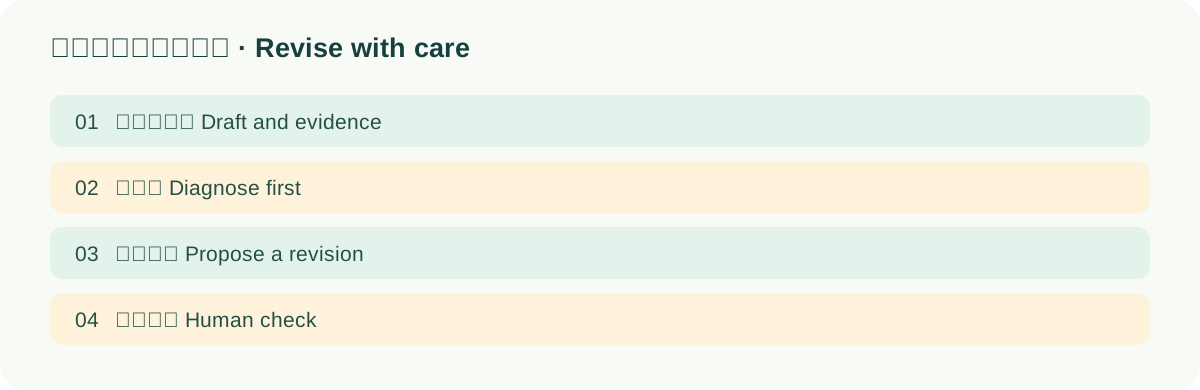
This tutorial uses the open-source Academic Writing Skills project and a fictional research paragraph. You will equip a compatible agent, diagnose an argument before editing, propose a bounded revision and review whether it preserves the evidence.
You will make: a checked paragraph, an evidence-to-verify list and a reusable review prompt. These skills are instructions and references for an AI agent; they do not train the model or change its weights. You remain responsible for the research, citations and final manuscript.
Who this is for
You need: Claude Code installed and signed in, or another agent that supports Agent Skills; a terminal; your own draft and verified material you are permitted to share. This tutorial uses Claude Code as an example. Start with fictional or non-sensitive data and follow your institution’s AI, copyright and research-data policies.
Step 1: Understand the two capabilities
The project provides English, Traditional Chinese and Simplified Chinese guidance for both capabilities:
| Skill | Purpose | When to use it |
|---|---|---|
academic-writing-skills | Plan, draft and revise academic writing | Structure an argument or revise an existing passage |
paper-review | Assess a manuscript and report findings, review-only by default | Get a list of issues before deciding what to change |
Choose one language entry for each capability. The instruction language does not automatically set the manuscript’s output language, so specify it in your request. For manual installations, the author says the review entry also requires the writing entry in the same language; keep its references, scripts and assets together.
Installing a skill gives an agent a set of working instructions. It does not train the model on your paper or guarantee that every suggestion is correct.
Step 2: Install in Claude Code
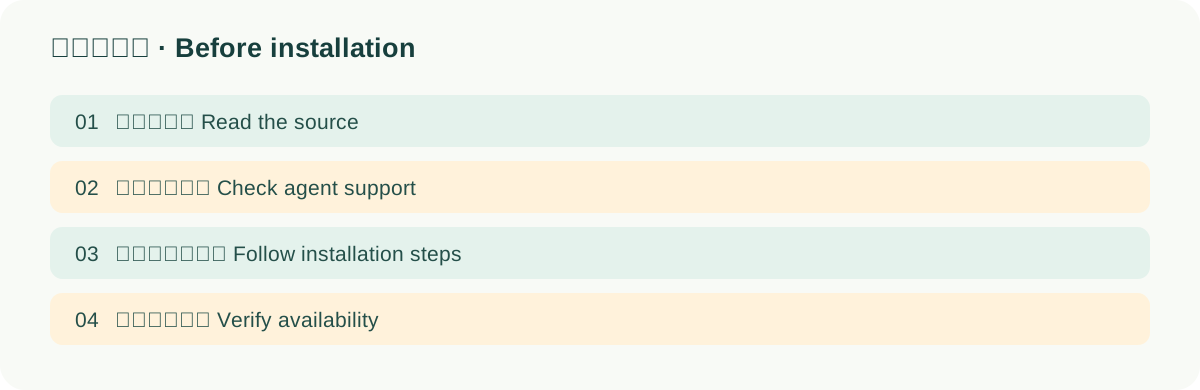
Check the project’s current installation instructions. The author documents this Claude Code marketplace approach. In a terminal where Claude Code is installed and signed in, run these lines one at a time:
claude plugin marketplace add WenyuChiou/ai-research-skills
claude plugin install academic-writing-skills@ai-research-skills --scope user
Restart Claude Code and ask whether academic-writing-skills and paper-review are available. If the command fails, check that Claude Code runs in your terminal and compare your steps with the author’s installation and update guidance. Read and assess an external plugin before installing or running it, and follow your tool’s permission prompts.
Using another tool? The project recommends the available skill or plugin interface for Codex or ChatGPT; other Agent Skills clients use their own documented installation directories. Pasting a repository URL into ordinary chat does not necessarily install a skill.
Step 3: Prepare a short draft and its context
Do not start by asking for an entire paper to be rewritten. Choose a passage of roughly 100–200 words. Gather its purpose, adjacent text, verified evidence and terminology or research question that must not change. Share only material you are allowed to provide; follow confidentiality and research-ethics rules.
This is a fictional example, not a real study:
Research question: How do participants describe using AI to organise notes?
Evidence scope: 12 volunteer interview participants at one institution.
Recorded observation: Some participants said an AI draft helped them start organising notes.
Not provided: Changes in grades or experiences at other institutions.

Draft: AI tools help university students organise notes faster and therefore improve grades.
The draft exceeds the evidence. The supplied material reports some participants’ perceptions; it does not measure speed or grades and does not represent every student. Those are issues to flag, not gaps for AI to fill with invented results.
Step 4: Request diagnosis before editing
Provide your question, passage and permitted source material, then use:
Use academic-writing-skills to review this passage.
First identify:
1. Its main claim.
2. Which statements are supported by my material and which go beyond it.
3. How it connects to the research question and adjacent paragraphs.

Preserve my confirmed terminology, population and scope. Do not invent numbers,
authors, citations or page numbers; list missing evidence as “to verify”.
Suggest changes only at this stage; do not edit my files.

Research question: [insert]
Purpose of paragraph: [insert]
Verified material and source locations: [insert permitted material]
Adjacent text: [provide if relevant]
Draft: [insert your own text]
Check each finding. If the assistant claims a study “did not mention” something when you supplied only an excerpt, change that to “the material supplied does not mention it”; a missing excerpt is not proof of absence.
Step 5: Propose a revision and compare it line by line
Once you agree on the diagnosis, ask the agent to revise only that passage and explain significant changes. Here is an illustrative revision direction based solely on the fictional material:
It preserves “some participants”, “said” and “begin organising”, while removing unsupported claims about speed and grades. It is not a standard answer to paste into your paper: check it against your own method, data and original text.
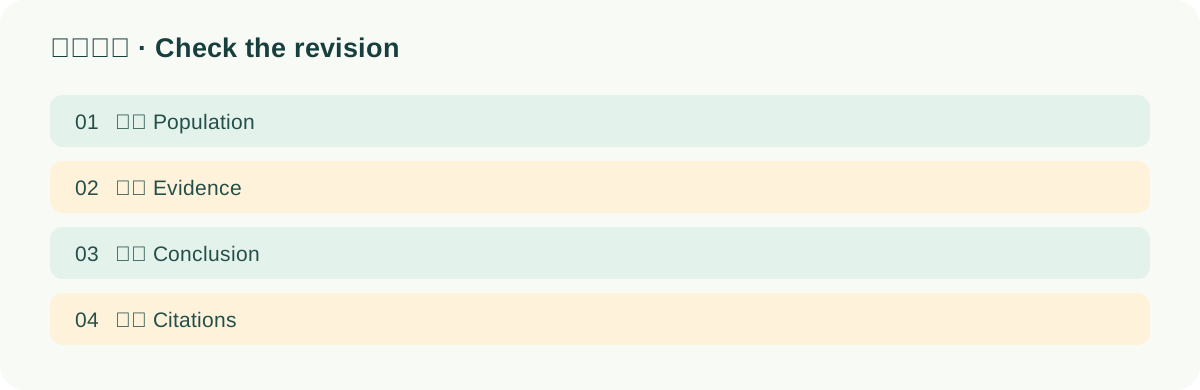
| Check | What the example supports | If the revision differs |
|---|---|---|
| Population | Some of the 12 interview participants | Do not generalise to all students |
| Evidence | Participants’ descriptions | Do not present a measured grade effect |
| Scope | Helped them begin organising notes | Do not add speed or causation |
| Citations | Only sources you personally verified | Mark missing items for checking |
Step 6: Use paper-review as a separate pass
If the review capability is installed, ask for findings on the edited passage and its neighbours. The author describes full-paper review across argument and structure, evidence and scope, scholarly writing, and delivery integrity; a short passage need not mechanically trigger every full-paper check.
Use paper-review to assess this passage and its adjacent text.
For each issue, identify its location, why it matters and how I can verify it.
Separate claims supported by my supplied material from items I still need to check.
Provide a review report only; do not edit files or invent citations.
Decide whether to accept, alter or reject each suggestion and record why. The review is advice, not a supervisor’s grade or a substitute for research judgement.
Common mistakes
Turning a few participants’ experiences into a universal conclusion. Check the population, sample and data-collection method; preserve the limits.
Asking AI to fill missing citations. Open real sources and verify authors, year, pages and meaning. If you cannot check a source, mark it unresolved.
Rewriting everything at once. Start with one passage and preserve the original so changes in meaning and terminology are visible.
Ignoring course AI policies. Institutions differ on permitted use, disclosure and what data may be shared. Check before submitting.
Your practice
1. After installing the skill, choose a non-sensitive passage and verified material you may share.
2. Ask for a diagnosis without editing files.
3. Select one suggestion, request a revision and check its population, evidence and conclusion sentence by sentence.
4. Request a review-only findings list with paper-review.
5. Save the original, revision and checking notes; disclose AI use as your course requires.
Done when: you can explain why at least one revision preserves the original meaning and identify claims that still need checking.
Key takeaway
The skills can make planning and review more systematic, but they do not verify your evidence for you. Keep the original, check changes carefully and decide on the final wording yourself.